
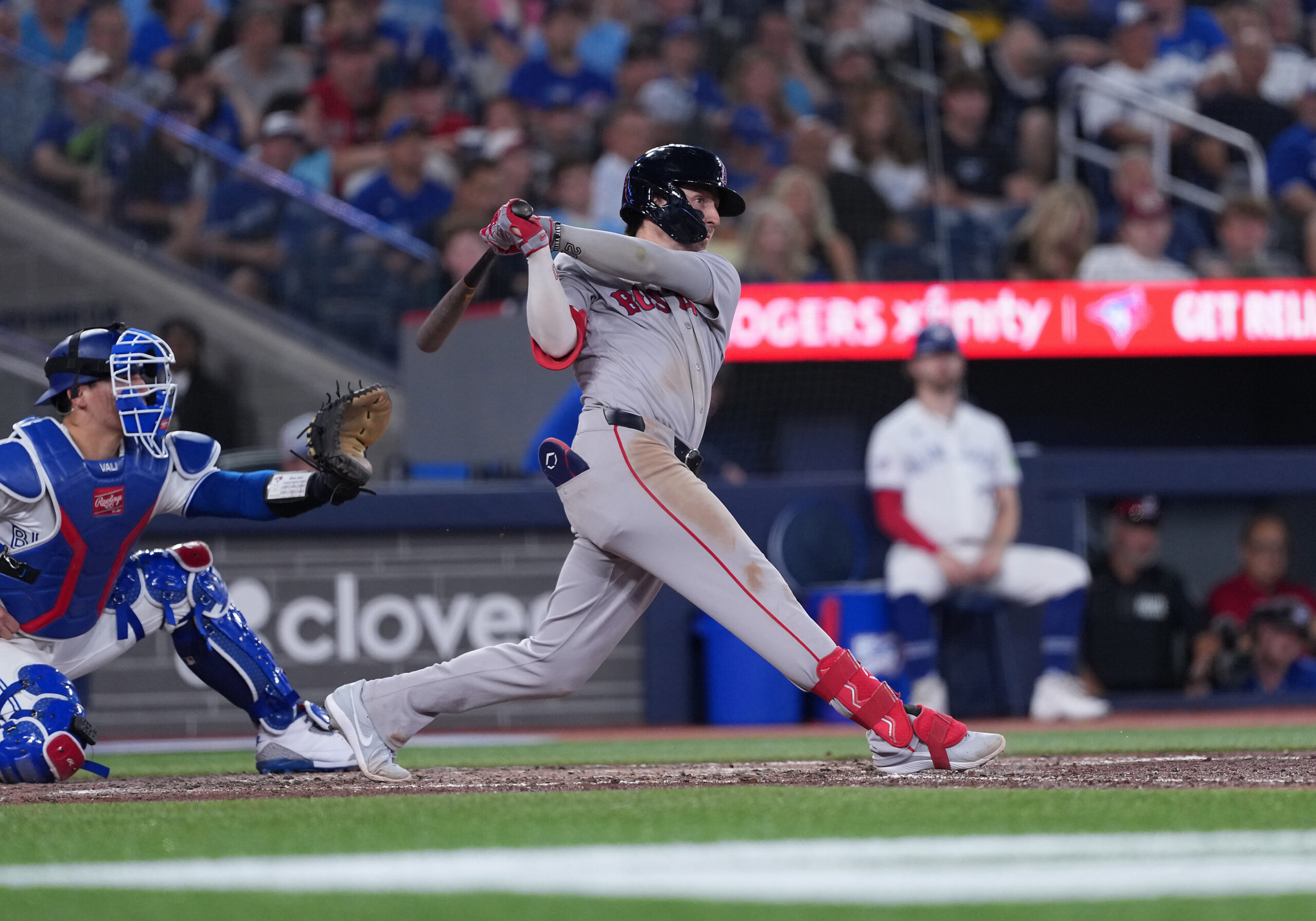
Something weird went down in Toronto that had everyone scratching their heads. For fifteen minutes, players and fans asked the same thing. Did that run count? How many outs were on the board? The game stalled at Rogers Centre on Monday night (top of the seventh, to be exact). The Red Sox were down 2-0, desperate to claw back in.
The Play That Stopped the Game
It kicked off with a hard liner off the bat of Nick Sogard. Vladimir Guerrero Jr. scooped it up at first base. Before he could fire to second for the first out, the ball hit the dirt. Sogard held first. Anthony Seigler cruised to third. The scoreboard flashed two outs. The announcer called it a double play, too. But the guys on the field? They looked totally lost.
Ceddanne Rafaela flew out to center field. Nobody knew if that was the second or third out. Brett Bateman lobbed the ball back in. It reached first base where Vladdy tagged the bag. The umpires started huddling with the managers. Max Scherzer even shouted his opinion from the dugout. The big question was simple: did the runner from third score?
Crew chief Chris Guccione stepped up to the mic to explain the mess. He informed the spectators that a time play was occurring, stating the third out happened at first base. The runner did not tag up. The runner on third crossed home plate before that out was made. So they had to call New York for a rules check (a move that doesn’t happen every day).
The Ruling Changes the Score
Umpires waited while officials in New York checked the rulebook. Once consulting with the New York group, the umpiring team gathered again with both managers, and Guccione once more spoke to the audience on TV and in the stands. He had the final answer. “After calling New York and getting it all straightened out, the run is going to score,” Guccione said.
The inning ended right then. The final count was clear. “End of the inning. Two runs for Toronto, one run for Boston.” The Blue Jays won the game 2-1. This weird play did not change who won the night. It just added a long delay and a lot of confusion. The Red Sox lost the opener of the series. It’s a loss they’ll want to forget.
Why This Rule Confuses Everyone
This kind of play happens rarely. It is a time play because the third out was not a force out. The runner on third scored before the out at first was recorded. But the runner did not tag up on the fly ball. That is the key. If the runner leaves early and the defense gets a force out or tags the runner, the run does not count. Here, the out was a tag at first base. That is not a force out. So the run counts even though the runner left early.
The confusion came from the scoreboard and the announcer. They said two outs. The players thought it was three. When Rafaela caught the fly ball, the defense thought the inning was over. They did not tag the runner from third. They just threw the ball back to first. If they had tagged the runner from third before the out at first, the run would not have counted. But they did not. They made the out at first. That allowed the run to score.
This shows why baseball rules are so tricky. You have to know the difference between a force out and a tag out. You have to know if the runner tagged up. The umpires did the right thing. They stopped the game. They checked the rule. They got the answer right. It took fifteen minutes. But they got it right. That is what matters most.
The Red Sox will try to bounce back in the next game. They face a Blue Jays team that is playing well. This loss hurts, but it was a strange one. The rule check was fair. The run counted. The game went on. Now the Sox have to focus on winning the next one. They cannot let this weird play shake them up too much. The series continues Tuesday night in Toronto.
Sources: MLB.com Red Sox (official), Over the Monster, Over the Monster, Over the Monster